Our Company


Why Choose an 808 Nm Diode Laser for Hair Removal?

Why Choose an 808 Nm Diode Laser for Hair Removal?

Hair removal technology has changed considerably. Yet, effective treatment still depends on wavelength, skin assessment, and clinical technique. The 808 Nm Diode Laser remains widely used because its wavelength reaches the hair follicle with focused, controlled energy. It targets melanin in the hair shaft while limiting unnecessary heating near the skin surface.

Dr. Michael H. Gold, a dermatologist and laser-treatment specialist, has stated, “Successful laser hair removal depends on matching the technology to the patient, not treating every skin type the same way.” This principle matters in real treatment rooms. A technician must consider hair thickness, skin tone, treatment area, recent tanning, and medication history. One setting cannot fit everyone.

The 808 Nm Diode Laser is often chosen for its balance of penetration and treatment efficiency. Its longer wavelength can support treatment across many skin types when proper cooling and calibrated fluence are used. Patients may notice warmth, brief snapping sensations, or mild redness around follicles. These reactions are common, but they should remain temporary and manageable.

Results are not instant. Hair grows in cycles, so several sessions are usually needed. That detail is easy to overlook. It also explains why promises of permanent, effortless removal deserve caution. Experience matters, but equipment alone cannot guarantee results. Safe practice requires trained professionals, honest consultation, protective eyewear, and realistic expectations. The strongest reason to choose an 808 Nm Diode Laser is not its name. It is the combination of suitable wavelength, careful assessment, and consistent clinical judgment.
Why Choose an 808 Nm Diode Laser for Hair Removal?

How 808 Nm Diode Laser Hair Removal Works

Why Choose an 808 Nm Diode Laser for Hair Removal?

An 808 nm diode laser targets melanin inside the hair shaft and follicle. Its near-infrared wavelength reaches the dermis with controlled penetration. Absorbed light becomes heat, damaging follicular structures during the active anagen phase. Resting hairs respond weakly, so treatment requires repeated sessions. The American Academy of Dermatology Association reports that patients commonly need six or more treatments for noticeable long-term reduction.

In practice, operators adjust fluence, pulse duration, spot size, and cooling. These settings matter more than the wavelength alone. A 2022 review in Lasers in Medical Science found that clinical hair-reduction results vary widely, often around 50–80% after a treatment series. Results depend on hair thickness, skin tone, hormone status, and treatment intervals. Dark, coarse hair usually absorbs energy more efficiently. Fine or light hair can be stubborn.

Skin comfort is not optional. Cooling protects the epidermis while allowing useful follicular heating. A trained provider should assess tanning, medications, pigment risk, and previous reactions. The U.S. Food and Drug Administration distinguishes permanent hair reduction from complete, permanent removal. That difference is important. Regrowth may appear months later, especially with hormonal changes. I have seen treatment plans fail when settings were copied between clients. The machine may be consistent; human skin is not. Even careful protocols need review, adjustment, and realistic expectations.

Why the 808 Nm Wavelength Targets Hair Follicles

Why Choose an 808 Nm Diode Laser for Hair Removal?

The 808 nm wavelength reaches hair follicles through near-infrared light. Hair melanin absorbs this energy more readily than surrounding skin. The absorbed light becomes controlled heat around the follicle. This heat can weaken the follicle’s growth activity over repeated sessions.

The follicle needs the right temperature, not excessive heat. Too little energy may produce weak results. Too much may increase skin irritation or pigment changes. A trained practitioner adjusts fluence, pulse duration, and cooling for each treatment area. Skin tone, hair thickness, and recent sun exposure all matter.

Dark, coarse hair often responds more visibly because it contains more melanin. Fine or light-colored hair may respond less consistently. Hair also grows in cycles, so only active follicles receive the strongest treatment. That is why several appointments are usually needed. It is not instant. During treatment, clients may feel brief warmth or small elastic-band snaps. Cooling can make the experience easier.

I would not call 808 nm a perfect match for everyone. Results can vary across the upper lip, underarms, legs, and bikini area. Some regrowth may occur because hormones and genetics influence follicle activity. A patch test and honest medical history help reduce avoidable problems. The wavelength matters, but careful assessment matters just as much.

Key Benefits of 808 Nm Diode Laser Treatment

An 808 nm diode laser delivers light that is absorbed by melanin in the hair shaft and follicle. Its wavelength can reach hair roots beneath the skin’s surface, while controlled pulses limit heat exposure to surrounding tissue. This makes treatment useful for reducing unwanted hair on areas such as the legs, underarms, or back. A cool gel or contact-cooling handpiece may help ease warmth during treatment. That matters.

Hair grows in cycles, so one appointment cannot target every follicle at its most responsive stage. Multiple sessions are usually needed, with timing based on the treatment area and individual hair growth. Results vary. Dark, coarse hair often responds better than very light, gray, or fine hair because it contains less target pigment. Skin tone, recent tanning, medications, and medical history also affect suitability. A qualified practitioner should assess these factors and explain possible redness or temporary sensitivity. A small test spot may offer useful guidance, though it cannot predict every response. Some areas may need maintenance, and outcomes are not perfectly uniform.

Why Choose an 808 nm Diode Laser for Hair Removal?

Common nominal wavelengths used in laser hair-removal systems

At 808 nm, diode lasers offer a widely used near-infrared option for hair reduction. Wavelength is only one treatment consideration: skin tone, hair characteristics, device settings, and practitioner assessment also matter. The wavelengths shown are common nominal values; actual devices may vary.

Factors Affecting Treatment Results and Safety

An 808 nm diode laser targets pigment in the hair shaft, but wavelength alone does not determine results.

Hair color, thickness, growth stage, and skin tone all matter. Coarse, dark hair often responds differently from fine, light hair. Hair grows in cycles, so several sessions are usually needed. Results vary.

Hair response Hair color, thickness, growth stage, and skin tone all matter.

Treatment settings should suit the person, not a preset chart. Energy, pulse duration, and cooling affect both comfort and skin response.

A trained professional should review medical history, recent tanning, medications, and skin sensitivity before treatment. A small test area can reveal unexpected reactions. It is not a guarantee.

Safety depends on careful technique. Protective eyewear must match the laser, and the treatment area should be clean and free of irritating products.

Cooling can reduce heat discomfort, though it does not remove all risk. Redness may occur briefly; blistering or lasting pigment changes need prompt medical advice.

Small details matter.

Even with good screening, outcomes can be uneven, and a session may need adjustment rather than simply more intensity.

What to Expect During an 808 Nm Hair Removal Session

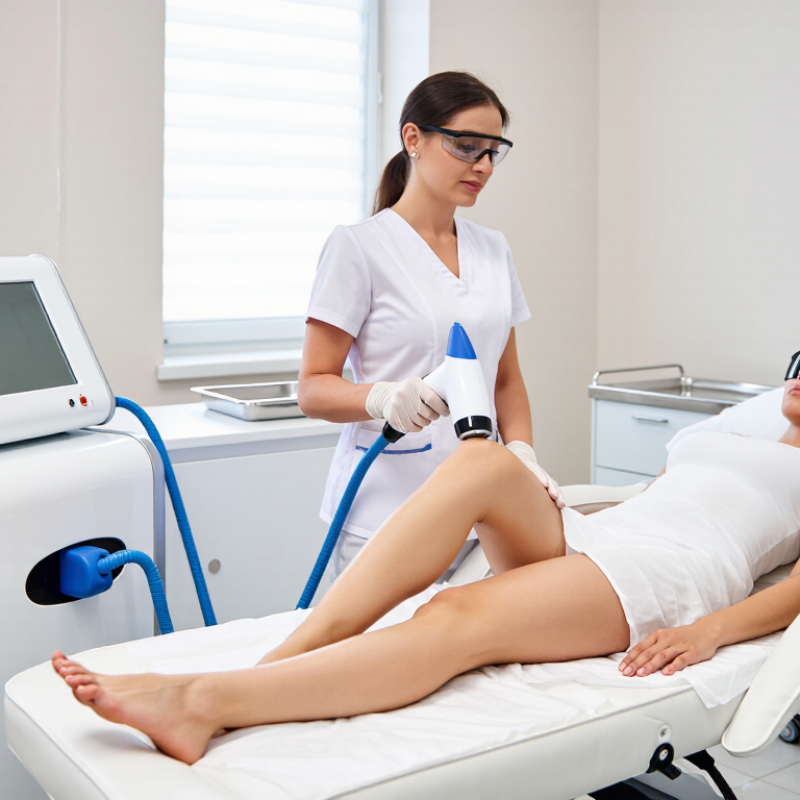
An 808 nm diode laser targets melanin inside the hair follicle. Its near-infrared wavelength can reach deeper follicles while limiting surface exposure. During a consultation, a qualified provider reviews your skin tone, hair color, medications, and treatment history. The area is usually shaved, cleaned, and protected with certified eye shields. Then, the handpiece delivers quick pulses across the skin. You may feel warm snaps or tiny rubber-band flicks. Cooling often follows each pulse. Mild redness around follicles can appear, then fade within several hours.

One session rarely changes everything. Hair grows in cycles, so the laser only affects follicles in an active growth phase. The American Academy of Dermatology states that many patients need two to six treatments, spaced several weeks apart. A 2023 review in Lasers in Medical Science also reported wide outcome differences linked to hair color, skin type, hair density, fluence, and follow-up time. Darker hair usually responds more clearly than blonde, gray, or red hair. Results are not perfectly predictable. That part deserves honest discussion.

Tips: Shave the area before treatment, but avoid waxing or plucking beforehand. Protect treated skin from strong sunlight, and follow the provider’s aftercare instructions. Ask about a patch test if your skin is sensitive or recently tanned. Share every medication and skincare product you use. Even careful plans can need adjustment.

Why Choose an 808 Nm Diode Laser for Hair Removal? — What to Expect During an 808 Nm Hair Removal Session

Topic What to Know What to Expect
Wavelength 808 nm is a near-infrared wavelength commonly used in diode laser hair-reduction systems. It targets melanin in the hair, transferring heat toward the follicle. The wavelength is one factor in treatment; device settings, cooling, skin tone, hair characteristics, and practitioner technique also matter.
Best-suited hair Laser hair reduction generally works best on coarse, pigmented hair because it contains more melanin to absorb light. White, gray, blond, and many red hairs may respond less reliably. A qualified provider can assess whether treatment is appropriate.
Skin tone and assessment Suitability depends on the contrast between hair pigment and surrounding skin, as well as the device and its settings. Modern systems may be used on a range of skin tones with careful assessment. Expect a review of your skin tone, recent tanning, medications, medical history, and treatment goals. A test spot may be recommended.
Before the appointment Follow the clinic’s instructions. Shaving is commonly requested shortly before treatment; waxing, plucking, and threading are often avoided beforehand because they remove the hair root. Arrive with clean skin and tell the provider about recent sun exposure, tanning products, medications, or skin irritation.
During the session The treatment area is exposed to short pulses of light. Protective eyewear should be worn, and a cooling method may be used to help protect the skin and improve comfort. You may feel brief warmth, snapping, or prickling sensations. Discomfort varies by body area, settings, and individual sensitivity.
Session length Time depends on the size and location of the area being treated. A small area may take only a few minutes, while larger areas can take considerably longer. Ask the provider for an estimate for your treatment area.
After treatment Temporary redness or mild swelling around hair follicles can occur and usually settles within a short period. Follow aftercare guidance, avoid excessive heat or friction if advised, and protect exposed skin from the sun. Contact the clinic if you develop unexpected or persistent symptoms.
Number of sessions Hair grows in cycles, so one treatment cannot target every follicle at the ideal growth stage. Multiple sessions are commonly needed. The number and spacing vary by area, hair growth, skin characteristics, and response to treatment; your provider should set an individualized plan.
Expected results Laser treatment is intended to achieve long-term hair reduction, not guaranteed permanent removal. Results differ from person to person, and maintenance treatments may be needed. Hair may shed gradually after a session, and regrowth can be finer or sparser over time. Results should be reviewed across the full treatment course.
Safety considerations Incorrect settings or unsuitable treatment can cause burns, pigment changes, or other skin reactions. Provider training and appropriate eye protection are important. Choose a qualified practitioner who can explain the risks, assess your skin, use suitable settings, and provide clear aftercare instructions.

Important: This table provides general information, not a personal treatment recommendation. Consult a qualified healthcare or laser-treatment professional to determine whether 808 nm diode laser hair reduction is suitable for you.