China’s pharmaceutical manufacturing sector has moved far beyond low-cost production. It now combines generic medicines, active pharmaceutical ingredients, vaccines, biologics, and contract development services. Manufacturing floors reveal this change clearly: stainless-steel bioreactors, automated filling lines, and detailed electronic batch records operate beside experienced technicians.
The IQVIA Institute’s Global Use of Medicines 2024 report projects global medicine spending will reach approximately 2.3 trillion dollars by 2028. China remains one of the most important growth markets in that forecast. The World Health Organization’s Global Vaccine Market Report also identifies China as a major contributor to global vaccine supply. These figures provide useful context for examining leading companies, including Sinopharm, Jiangsu Hengrui Pharmaceuticals, CSPC Pharmaceutical Group, WuXi Biologics, and other influential manufacturers.
Quality remains the harder question. Dr. Janet Woodcock, former director of the FDA’s Center for Drug Evaluation and Research, has emphasized, “Quality cannot be tested into products; it must be built into them.” This principle matters when comparing production capacity, regulatory records, research investment, and supply-chain resilience. A large factory is not automatically a reliable one.
Rankings are never perfect. Public data can differ between annual reports, stock filings, and regulatory disclosures. Some companies also outsource important production stages. That limitation deserves attention. This overview therefore considers measurable evidence, not marketing claims alone, while exploring which Chinese manufacturers demonstrate the strongest combination of scale, compliance, technical capability, and long-term credibility in Pharmaceutical Manufacturing.
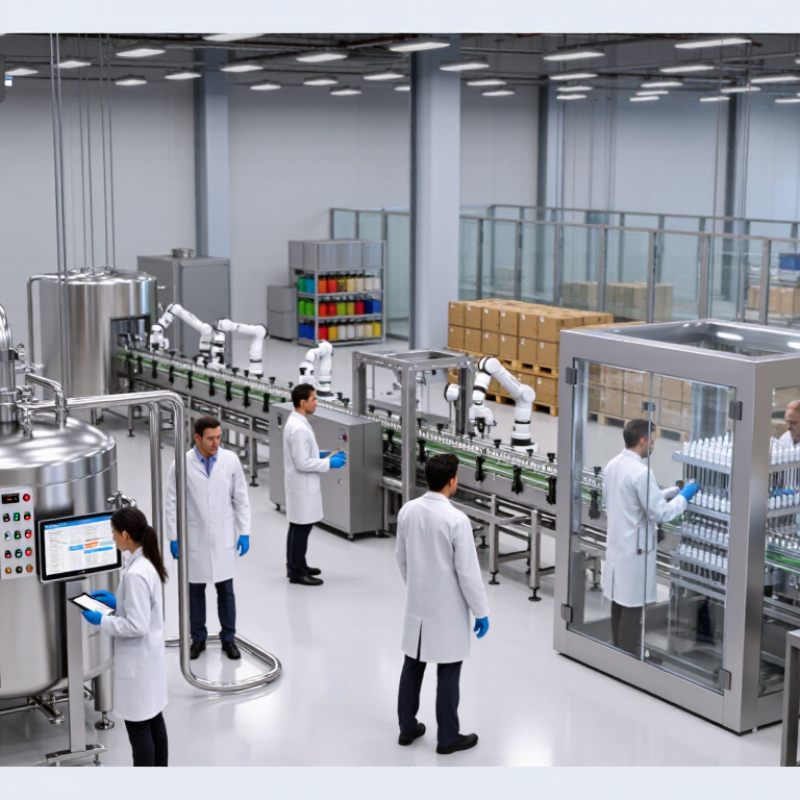
China’s pharmaceutical manufacturing industry is large, diverse, and still changing quickly. The National Bureau of Statistics reported pharmaceutical manufacturing revenue of about RMB 2.53 trillion in 2023. The same report showed weaker profits, reminding investors that scale does not guarantee efficiency. Leading manufacturers now compete through quality systems, process automation, and reliable supply chains. Production floors increasingly use electronic batch records and real-time temperature monitoring. These details matter when products cross provincial and international borders.
The China National Medical Products Administration continues aligning inspections with international quality expectations. Its regulatory guidance emphasizes data integrity, validated processes, and lifecycle management. IQVIA’s global market reports also identify China as a major pharmaceutical market, supported by expanding healthcare access and research activity. However, market size alone can mislead. Some factories have modern equipment but uneven documentation practices. Others have strong technical teams but limited global registration experience. A serious comparison should examine audit history, deviation controls, sterile manufacturing capacity, and evidence of stable commercial batches.
Tips: Request recent quality metrics, not only production capacity. Check whether certificates match the actual site. Review recall procedures and supplier qualification records. Industry reports provide direction, but factory-level verification remains essential. This is where many rankings become less convincing.

China Top Pharmaceutical Manufacturing Companies?
Ranking China’s top pharmaceutical manufacturers requires more than revenue. A credible scorecard should weigh GMP compliance, product quality, supply reliability, research capability, and audited financial strength. The National Medical Products Administration’s annual reporting emphasizes manufacturing oversight, inspection, and quality-risk control. These indicators reveal operational discipline better than factory size alone.
Quality should carry the heaviest weight. Reviewers can examine inspection findings, batch-release systems, recall history, and validated production lines. WHO guidance treats GMP as the foundation for consistent medicine quality. Supply resilience also matters. IQVIA’s Global Use of Medicines 2024 forecasts global medicine spending could reach 2.3 trillion dollars by 2028, increasing pressure on Chinese plants to deliver stable volumes and reduce shortages.
Research performance deserves a separate score. Useful measures include approved applications, clinical evidence, patent quality, and development spending. Export registrations and independent audit results add practical evidence. Still, rankings remain imperfect. Public data can be delayed, uneven, or difficult to compare across manufacturers. A large pipeline may also hide weak commercialization. The strongest assessment combines regulatory records, verified production performance, transparent reporting, and expert site experience. Numbers help, but they do not replace inspection.
A weighted evaluation framework based on measurable pharmaceutical manufacturing capabilities and industry standards.
Regulatory compliance and GMP performance receive the highest weighting because they directly affect product safety, approval readiness, and manufacturing reliability. Production capacity, quality systems, research capability, international market access, and supply-chain resilience provide additional dimensions for a balanced assessment. The percentages represent an evaluation model rather than data from any individual company or brand.
China’s leading pharmaceutical manufacturing companies are increasingly judged by quality systems, not production volume alone. Strong manufacturers operate GMP-aligned facilities with controlled cleanrooms, validated equipment, and traceable batch records. Their teams manage active pharmaceutical ingredients, finished medicines, and selected biological products under documented procedures. Modern plants often use electronic audit trails, automated filling lines, and stability chambers that monitor temperature and humidity. These details matter when product consistency must be demonstrated across multiple production cycles.
Reliable manufacturers also invest in analytical laboratories and trained quality professionals. Independent testing can verify identity, purity, potency, and microbial safety before release. Experienced companies support regulatory inspections with complete records, clear deviation investigations, and corrective action plans. Cold-chain logistics require equally careful handling, especially for temperature-sensitive materials. Not every facility performs equally well. Public information can be incomplete, and impressive equipment does not guarantee disciplined execution. Buyers should review inspection histories, quality agreements, technical capabilities, and supply continuity before choosing a manufacturing partner.
Some leading facilities provide contract development and manufacturing services, helping overseas clients transfer processes into Chinese production environments. Successful transfers depend on practical communication, realistic timelines, and well-defined responsibilities. Small documentation gaps can become expensive delays. Site visits, sample audits, and direct discussions with production engineers often reveal more than promotional claims. Companies with transparent reporting usually build stronger long-term trust.
China Top Pharmaceutical Manufacturing Companies?
China’s pharmaceutical manufacturing sector covers oral solid doses, sterile injectables, vaccines, biological medicines, and active pharmaceutical ingredients. Many facilities use automated weighing, closed transfer systems, and electronic batch records. These tools reduce handling errors and improve traceability from raw material to finished pack. Some plants also operate high-containment suites for potent compounds, with pressure-controlled rooms and specialized filtration.
Production capability depends on more than equipment. Skilled teams monitor dissolution, sterility, particle size, and stability during development and commercial production. Modern laboratories use chromatography, mass spectrometry, and microbiological testing to confirm identity and purity. Continuous manufacturing is gaining attention, especially for selected tablets and chemical processes. It can reduce waste and shorten processing time. Yet adoption remains uneven.
Quality systems often follow internationally recognized good manufacturing practices, supported by validated cleaning, environmental monitoring, and supplier audits. Temperature-controlled storage is essential for sensitive biologics, where a brief deviation can affect product performance. Manufacturing scale is impressive, but scale alone does not prove reliability. Documentation may be strong in one facility and less mature in another. Buyers should examine inspection history, batch-release controls, data integrity, and technical transfer experience. The details matter. A capable manufacturer should explain its process clearly, disclose limitations, and support realistic timelines rather than promise perfection.
China’s leading pharmaceutical manufacturers are increasingly judged by systems, not production volume. Quality begins with validated processes, clean utilities, trained operators, and complete batch records. Regulators expect data integrity from raw-material receipt to final release. A missing timestamp can damage trust.
The International Council for Harmonisation’s Q10 model links quality systems with continual improvement and lifecycle control. Manufacturers serving international markets must also manage inspections under different frameworks, including GMP expectations from Chinese, United States, European, and WHO authorities. The WHO estimates that one in ten medical products in low- and middle-income countries may be substandard or falsified. Strong supplier qualification and laboratory testing therefore remain essential. Small gaps matter.
Global demand raises the pressure. The IQVIA Institute’s Global Use of Medicines 2024 report projects worldwide medicine spending could reach approximately 1.9 trillion US dollars by 2028, compared with about 1.6 trillion dollars in 2023. This growth rewards reliable exporters, but scale can expose weak deviation controls, poor change management, or unstable cold-chain performance. Buyers should examine inspection history, recall procedures, stability data, and electronic records. Certifications help, but they are not proof of daily discipline.
An uncomfortable question remains: can a factory repeat the same quality standard during peak production?