Clinical Manufacturing plays a crucial role in the healthcare industry. Effective practices in this field can significantly impact the success of drug development. Companies must ensure high-quality production processes to meet stringent regulatory standards.
In clinical manufacturing, attention to detail is paramount. Each step affects the overall outcome. From raw material handling to final product testing, precision is essential. However, many organizations struggle with inconsistencies. This can lead to costly delays and failures.
Understanding best practices is vital for improvement. Implementing standardized protocols can enhance efficiency. Moreover, constant monitoring and evaluation are necessary. Organizations must reflect on their methods. There is always room for enhancement in clinical manufacturing processes. By focusing on continuous improvement, companies can achieve greater success in their missions.

In clinical manufacturing, implementing best practices is crucial for operational success. Effective processes can significantly enhance product quality and speed to market. According to a report from the International Society for Pharmaceutical Engineering, 75% of companies experience production delays due to inefficiencies. This statistic highlights the need for streamlined processes.
A critical factor in successful clinical manufacturing lies in robust quality assurance protocols. Ensuring compliance with regulatory guidelines can minimize risks. Statistics show that companies prioritizing quality control manage to reduce errors by up to 30%. However, many still overlook this aspect, leading to costly mistakes that could have been avoided.
Another area demanding attention is supply chain management. A recent report indicated that poor supply chain visibility costs the industry approximately $8 billion annually. Organizations are increasingly leveraging advanced analytics to address these issues. Yet, despite these advancements, challenges persist, revealing ongoing gaps that require careful evaluation. Addressing such weaknesses could pave the way for more efficient clinical trials and ultimately better patient outcomes.

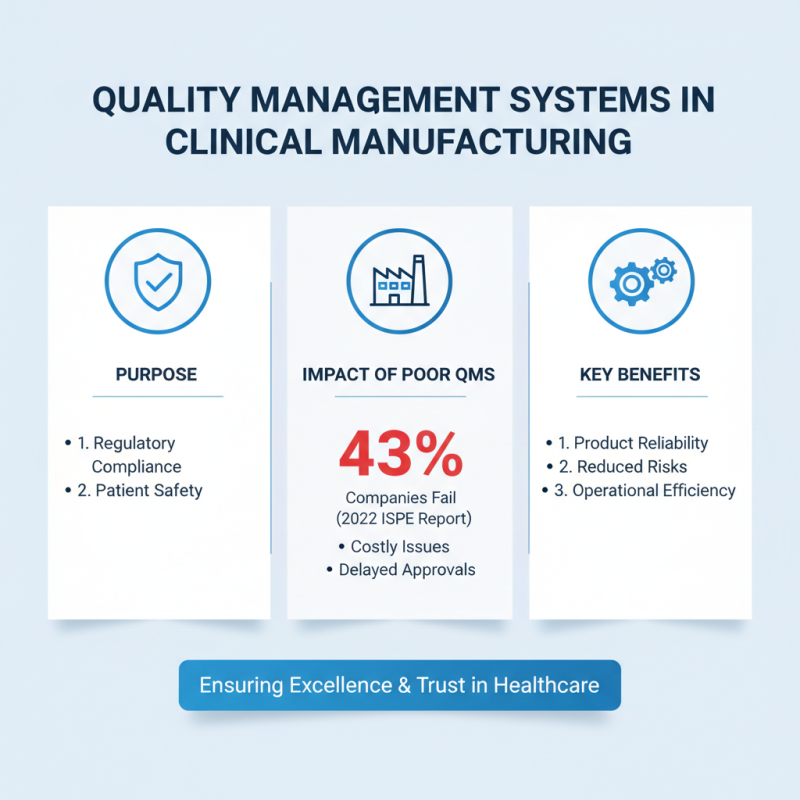
Quality Management Systems (QMS) are vital in clinical manufacturing. These systems ensure products meet regulatory standards and patient safety requirements. According to a 2022 report by the International Society for Pharmaceutical Engineering, 43% of companies fail to implement effective QMS, leading to costly compliance issues.
A robust QMS minimizes risks in manufacturing processes. Organizations need structured documentation and standard operating procedures. A well-defined QMS can lead to a 30% improvement in operational efficiency. However, many firms struggle with maintaining consistent quality. Around 60% of manufacturers reported encountering repeated deviations in their processes.
Training plays a critical role in the success of QMS. Continuous education for staff is essential. Many companies neglect this aspect, leading to knowledge gaps. A survey found that 25% of manufacturing employees feel inadequately trained. This lack of training increases the likelihood of errors. Investing in a comprehensive QMS can bridge this gap and enhance product integrity.
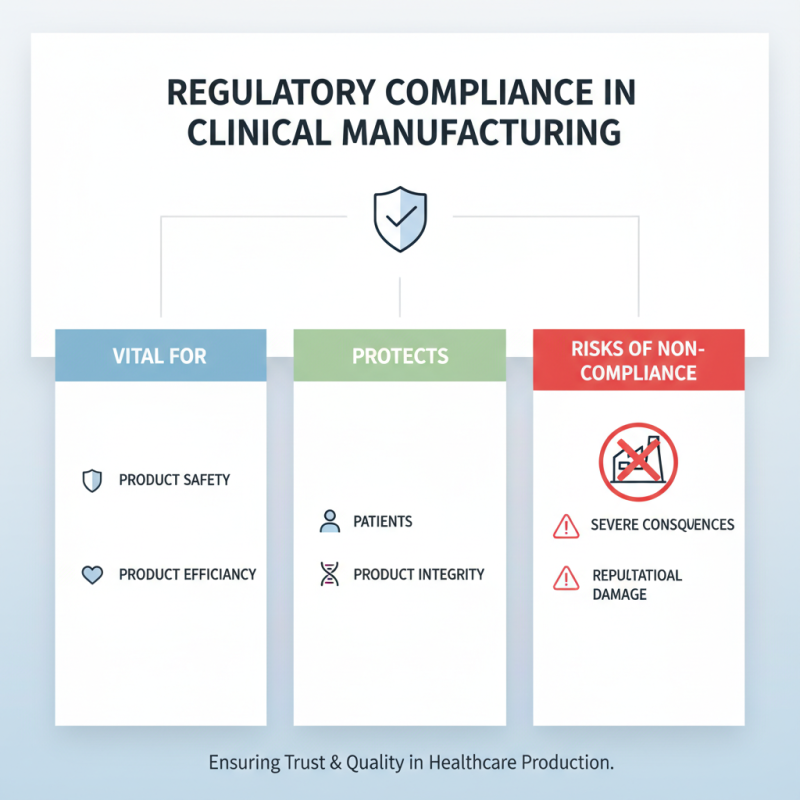
Regulatory compliance is vital in clinical manufacturing. It ensures the safety and efficacy of products. Non-compliance can lead to severe consequences. The focus on regulations protects not only patients but also the integrity of the products.
Tips for achieving compliance include training team members frequently. Understanding regulations is crucial for everyone involved. Regular audits and inspections can catch potential issues early. Documentation must be thorough and clear to avoid misunderstandings.
Many manufacturers find compliance daunting. They may overlook small details that lead to larger problems. Continuous learning can foster a culture of compliance. It's essential to adapt to changing regulations and embrace best practices. This commitment to compliance ultimately drives success, benefiting all stakeholders involved.
Effective supply chain management is crucial in clinical manufacturing. A well-structured supply chain can enhance productivity and reduce costs. A common pitfall is a lack of real-time data sharing. Poor communication often leads to delays and misunderstandings. Manufacturers should invest in integrated technology solutions that enable seamless information flow. This improves decision-making and agility.
Another critical aspect is the selection of suppliers. Relying too heavily on a single supplier can create vulnerabilities. Diversifying suppliers can mitigate risks associated with supply chain disruptions. Transportation is often overlooked. Inefficient logistics can lead to increased lead times and higher costs. Streamlining transportation processes must be a priority.
Lastly, training staff on supply chain processes is vital. Employees need to understand how their roles impact overall success. Regular training sessions can reinforce this knowledge. Incorporating feedback loops can help identify recurring issues in the supply chain. Reflecting on these challenges is essential for improvement. Fostering a culture of continuous learning will drive innovation within the manufacturing process.
| Best Practice | Description | Key Metrics | Impact on Supply Chain |
|---|---|---|---|
| Quality Control | Implement rigorous quality assurance protocols. | Defect rates, cycle time | Reduces waste and ensures compliance. |
| Supply Chain Collaboration | Engage with suppliers to optimize workflows. | Supplier lead times, collaboration scores | Improves efficiency and reduces delays. |
| Inventory Management | Use advanced systems for real-time inventory tracking. | Stock turnover rate, holding costs | Minimizes excess inventory and shortages. |
| Regulatory Compliance | Adhere to industry standards and regulations. | Audit scores, compliance rates | Ensures product safety and market access. |
| Technology Integration | Adopt advanced manufacturing technologies. | Downtime, production efficiency | Enhances productivity and reduces costs. |
| Employee Training | Regular training on best practices and new technologies. | Training hours, employee performance metrics | Boosts productivity and error reduction. |
| Data Analytics | Leverage analytics for decision-making. | Data accuracy, decision response time | Improves forecasting and demand planning. |
| Risk Management | Identify and mitigate potential risks in the supply chain. | Risk assessment score, mitigation success rate | Enhances resilience and response capabilities. |
| Sustainability Practices | Implement practices that reduce environmental impact. | Carbon footprint, waste reduction metrics | Improves brand reputation and compliance. |
| Customer Feedback Integration | Utilize customer feedback to enhance products. | Customer satisfaction scores, NPS | Enhances product quality and customer loyalty. |
In the rapidly evolving field of clinical manufacturing, leveraging technology is crucial for improving efficiency. According to a recent report by Deloitte, companies that adopt advanced analytics and automation in their manufacturing processes see up to a 20% reduction in operating costs. This shift allows pharmaceutical firms to streamline operations and minimize waste. For instance, implementing real-time data tracking can enhance decision-making, but many organizations still struggle with data silos and integration.
Moreover, investing in technologies like artificial intelligence and machine learning can significantly boost production capabilities. A study from McKinsey indicates that AI can enhance yield rates by 15% through predictive maintenance and optimized supply chain management. However, challenges remain. Many firms find it difficult to adopt these technologies due to workforce skill gaps and resistance to change. Without proper training, employees may not fully utilize new tools, leading to inefficiencies.
Clinical trials often face delays due to manufacturing bottlenecks. Embracing digital solutions, such as cloud-based platforms for production planning, can mitigate this issue. Research shows that companies with flexible manufacturing systems respond faster to changes in demand. Yet, the implementation of such systems requires upfront investment and a shift in company culture. The balance between innovation and operational stability continues to be a point of reflection for leaders in the industry.