China is a significant manufacturing base for small electrical components, including pins used in vape devices. For global buyers, selecting a Vape Pin supplier involves more than comparing unit prices. Pin diameter, contact resistance, plating consistency, and fit can affect assembly and product performance. Small parts matter.
Grand View Research estimated the global e-cigarette and vape market at USD 28.17 billion in 2023, with projected growth through 2030. This figure covers finished products, not Vape Pin demand, so it should not be treated as a component-market forecast. Still, it shows why dependable component sourcing deserves attention. A broad market estimate cannot confirm any individual factory’s capacity.
This guide introduces ten Chinese manufacturers for buyers to assess. Useful checks include material specifications, sample-to-production consistency, inspection records, traceability, and clear responses to technical questions. Ask how suppliers measure pin dimensions and test electrical contact. Request recent documentation, and verify that claims match the product and destination market. Requirements can differ.
A polished sample is not enough. Production batches may tell a different story, and even a careful shortlist cannot replace independent due diligence. Buyers should compare evidence, not just brochures, before choosing a supplier.
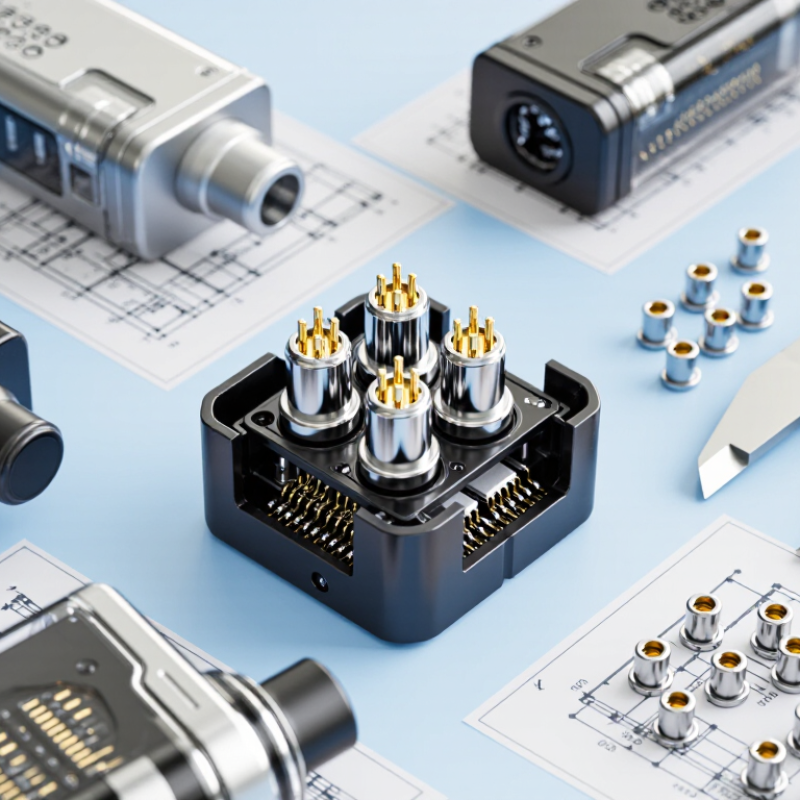
A vape pin is a small electrical contact inside a vape device. It connects the battery circuit to the heating assembly, allowing current to flow when the device is activated. In many designs, one pin carries the positive connection, while the device body or a second contact completes the circuit. The exact layout varies. Small parts matter.
Pins may be fixed or spring-loaded. A spring-loaded contact can adjust slightly when components meet, helping maintain contact despite minor differences in fit. The pin’s surface may use a conductive metal or a plated finish to limit resistance and wear. If the contact is loose, dirty, or poorly aligned, the device may behave inconsistently. A technician might see intermittent operation or notice a pin that sits unevenly.
For manufacturers, pin design involves more than conductivity. Dimensions, plating thickness, spring force, and assembly tolerance all affect performance. Inspection can include checking pin height, movement, and electrical continuity with suitable equipment. These checks are useful, but they do not prove every finished device will perform identically. That is a limitation worth remembering. A pin is only one part of a larger electrical system, and its function depends on compatible components and careful assembly.

Vape pins carry current through a tiny contact area, so material choice affects heat, voltage drop, and service life. Copper alloys offer useful conductivity, while brass can improve machinability. The Copper Development Association’s conductivity tables use annealed copper as the 100% IACS reference at 20°C; actual pin alloys conduct less. Plating can protect contacts from oxidation. IPC-4552A specifies 3–6 μm of electroless nickel and 0.05–0.125 μm of immersion gold for ENIG printed-board finishes. These figures are a useful comparison, not a universal pin specification. Small parts, big consequences.
Geometry matters just as much. A rounded contact face can help maintain consistent mating, while excessive plating or poor alignment may increase insertion force. IEC 60512-2-1 provides a method for measuring low-level contact resistance, but it does not set one pass value for every design. Buyers should define resistance limits, current, temperature rise, and mating cycles with their supplier, then verify samples under realistic conditions. Ask for plating-thickness records and test results, not only a material name. A pin that passes a room-temperature check may still fail after repeated use or exposure to moisture. That assumption can be wrong. Verify the full assembly, since housing tolerances and contact pressure also affect performance.
An anonymized engineering reference for comparing vape-pin types and supplier capabilities. The rows describe common component designs, not ranked manufacturers or company-specific specifications.
| No. | Vape Pin Type | Common Material Options | Typical Design Features | Key Performance Requirements | Useful Verification Checks |
|---|---|---|---|---|---|
| 01 | 510 Connector Center Pin | Copper alloys or brass; nickel, gold, or other contact plating may be specified. | Central electrical contact within a threaded 510-style connector; may be fixed or spring-loaded. | Consistent electrical contact, appropriate fit with the mating connector, and resistance to wear and corrosion. | Check interface dimensions, contact resistance, plating coverage, and fit with the intended mating parts. |
| 02 | Spring-Loaded Contact Pin | Copper-alloy contact; stainless steel or other suitable spring material; plated contact surface where required. | Moving plunger and spring provide travel to accommodate differences in mating-part position. | Repeatable contact force, smooth travel, reliable return, and stable electrical contact over the intended cycle life. | Measure travel and force; inspect for sticking, uneven return, contact wear, and resistance changes after cycling. |
| 03 | Battery Positive Contact Pin | Copper, brass, or copper alloys; surface finish selected for conductivity and environmental exposure. | Conductive contact positioned to connect the battery positive terminal to the device circuit. | Low and stable contact resistance, secure retention, and no unintended shorting against adjacent conductive parts. | Test electrical continuity and resistance; inspect clearances, insulation, retention, and assembly alignment. |
| 04 | Battery Negative Contact Pin | Copper alloys, brass, or stainless steel, depending on the electrical and mechanical design. | Forms a return-path contact; may be mounted in a housing or integrated with a conductive structure. | Reliable circuit return, secure mounting, corrosion resistance, and electrical isolation from the positive path where needed. | Check continuity, resistance, mounting stability, insulation distances, and compatibility with the battery design. |
| 05 | Cartridge Contact Pin | Copper-alloy contact materials with a suitable plated or unplated finish for the application. | Small contact designed to meet a cartridge or pod terminal; geometry varies by device interface. | Repeatable mating, reliable contact despite insertion and removal, and resistance to residue-related contact problems. | Verify mating geometry, insertion fit, contact continuity, and performance after repeated connection cycles. |
| 06 | Charging Contact Pin | Copper alloys or other conductive materials; plated surfaces may be used to improve contact durability. | Exposed or recessed contact designed to mate with a charging dock or cable assembly. | Consistent charging connection, resistance to oxidation and handling wear, and safe separation between contacts. | Inspect contact spacing and finish; verify continuity, charging behavior, and resistance to expected handling conditions. |
| 07 | Pogo-Style Contact Pin | Conductive copper-alloy plunger and barrel components with a spring selected for the required force and environment. | Telescoping plunger-and-barrel construction with internal spring; commonly used for repeatable detachable contacts. | Consistent spring force, reliable electrical continuity, smooth movement, and suitable resistance to contamination. | Measure force and stroke; test contact resistance and cycling; check for debris sensitivity and plunger binding. |
| 08 | Press-Fit Contact Pin | Copper alloys or brass, with material temper and finish chosen for the board and contact design. | Interference-fit section retains the pin in a printed circuit board or carrier without a threaded joint. | Secure retention without damaging the board, stable electrical connection, and dimensional consistency. | Check pin and hole dimensions, insertion force, retention force, board condition, and electrical continuity. |
| 09 | Threaded Connector Contact Pin | Brass or copper alloys are common choices; plating depends on the mating interface and exposure conditions. | Contact element assembled in a threaded connector body; thread and pin geometry must match the specified interface. | Secure assembly, repeatable mating, stable contact, and resistance to loosening or surface degradation. | Verify thread form and fit against the drawing, assembly torque where specified, contact resistance, and retention. |
| 10 | Custom-Machined Contact Pin | Copper, brass, copper alloys, or stainless steel, selected according to conductivity, strength, and environment. | Application-specific turned or formed geometry; may include shoulders, grooves, flats, or plating zones. | Compliance with drawing tolerances, reliable electrical performance, burr-free edges, and repeatable production quality. | Review material certification, dimensional inspection, surface finish, burr control, plating records, and electrical test results. |
Buyer note: Pin dimensions, plating thickness, spring force, resistance limits, and cycle-life targets are application-specific and should be defined in the product drawing or purchase specification. Confirm the applicable regulatory and material-compliance requirements for the destination market.
In China, vape pins are commonly made from copper alloys chosen for conductivity and spring behavior. Wire or strip is cut, stamped, or precision-turned, then deburred and plated. A burr you can barely see may still damage a mating contact. Small parts demand close control.
Grand View Research’s 2024 e-cigarette and vape market report valued the global market at US$28.17 billion in 2023. That figure describes the wider market, not pin demand, but it helps explain why buyers ask for repeatable production records. Reliable factories check incoming alloy, pin diameter, straightness, plating coverage, and contact resistance. They should retain lot numbers and inspection results. Ask for actual records, not only a capability sheet.
Testing can include dimensional gauges, resistance measurement, plating-thickness checks, and repeated mating tests. Relevant connector test methods in the IEC 60512 series can inform test plans, though they are not a vape-pin certification. Simple tests matter. Corrosion exposure and pull-force checks may reveal weak plating or poor retention. Results should be tied to defined limits and sampled consistently. One limitation remains: a clean test report cannot prove every pin in a batch is flawless. Independent sampling helps.
China’s vape pin suppliers vary in process depth, from precision turning to stamping and secondary plating. The ten manufacturer profiles should be compared by measurable capabilities, not catalogue breadth. Check pin material, contact resistance, dimensional tolerance, plating thickness, and inspection records. Ask for a drawing-based sample and a batch report. A polished sample alone proves little.
Fortune Business Insights valued the global e-cigarette market at USD 22.45 billion in 2023. That broad market estimate does not measure vape pin demand, but it signals why buyers should verify capacity and quality systems carefully. Strong supplier profiles document production equipment, traceability, testing methods, and export experience. For each maker, confirm whether stated tolerances apply to routine production or only prototypes. Small pins need consistent dimensions; a slight variation can affect assembly fit.
Tips: Request samples from multiple production lots. Compare plating under magnification, then check dimensions with calibrated gauges. Ask who performs inspection and how defects are recorded. Keep the drawing version clear. Details matter.
For global buyers, a vape pin supplier should be assessed on repeatable quality, not just a low unit price. Ask for material specifications, plating details, dimensional tolerances, and inspection records. A sample can reveal uneven coating, rough edges, or a loose fit before a large order is placed. Samples reveal problems. Check whether the supplier can explain how defects are tracked and corrected, rather than simply promising consistency.
Compliance needs careful, destination-specific review. Request current material declarations and relevant test documents, then confirm that they match the exact pin, finish, and production site being quoted. Requirements can differ between markets and may change. A document with a familiar title is not proof that it covers your product. Keep records linked to batch numbers, and clarify who will provide updated paperwork if specifications change.
Compare quotes using total landed cost, not unit price alone. Include tooling, minimum order quantities, inspection, packaging, freight, insurance, and applicable import charges. Ask for lead times in writing, including sample approval and production stages. Details matter. For shipping, confirm carton dimensions, labeling, dispatch terms, and how delays or damaged goods are handled. One point worth reconsidering: the fastest route is not always the most dependable, especially when production dates are tight.
Suggested evaluation weights (%) for comparing suppliers. These are a buyer-planning framework, not survey results or ratings of specific manufacturers.
Prioritize applicable compliance documents and product test reports, then compare quality controls, total landed cost, shipping reliability, and after-sales support. Confirm requirements for each destination market before placing an order.
