How to Source Inositol Powder from Reliable Suppliers?
Sourcing Inositol Powder from a reliable supplier requires more than comparing prices or choosing attractive packaging. Buyers should examine product identity, purity, manufacturing controls, and supply continuity. A polished website proves little. Real evidence matters.
Experienced procurement teams usually request a current Certificate of Analysis for each batch. The document should show testing methods, assay results, moisture, microbial limits, and relevant contaminants. Independent laboratory verification can strengthen confidence, especially when results come from an ISO/IEC 17025-accredited facility. Ask whether the supplier follows recognized quality systems, such as GMP principles, and whether production records support full batch traceability.
Practical details often reveal supplier reliability. Check the powder’s appearance, particle size, packaging seal, storage conditions, and recommended shelf life. A supplier should explain how materials are protected from moisture during transport. Samples should match the final commercial product, not a specially prepared laboratory batch. That point is easy to overlook.
Clear communication also matters. Reliable suppliers answer technical questions directly and provide consistent documents. They should discuss minimum order quantities, lead times, change-control procedures, and complaint handling without vague promises. A factory visit or qualified third-party audit may provide useful evidence, although neither guarantees perfect performance. No checklist is flawless.
Buyers should compare several suppliers using documented criteria rather than instinct alone. Price remains relevant, but unstable quality can create higher costs through rejected batches and production delays. Careful sourcing combines technical review, supplier experience, independent testing, and honest risk assessment. Inositol Powder deserves that level of attention. Even experienced buyers should revisit their assumptions when new data appears.
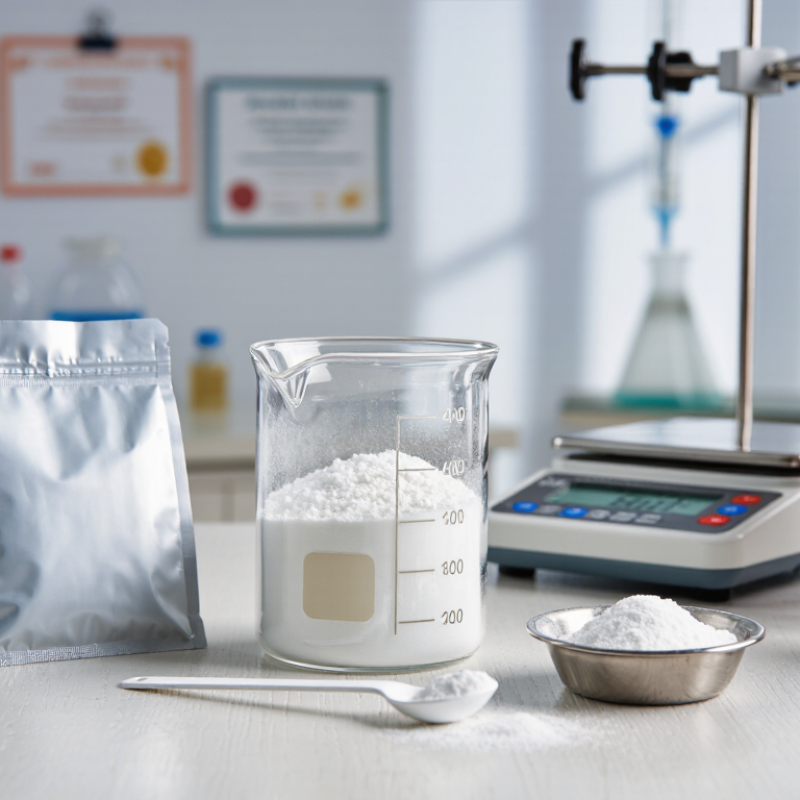
Define Inositol Powder Specifications and Quality Requirements
A reliable supplier starts with a written specification, not a glossy certificate. Define the inositol form clearly, such as myo-inositol, powder grade, particle size, and intended use. Request an assay target, usually 98–99% or higher, but do not accept this number without a validated test method. Confirm identity through infrared spectroscopy or another suitable compendial method. Small details matter.
Your specification should cover moisture, ash, residual solvents, heavy metals, and microbiological limits. For moisture, set a practical limit based on packaging and storage conditions, rather than copying a generic value. The laboratory should test total aerobic microbial count, yeast, mold, and specified pathogens using recognized methods, including USP chapters <61> and <62>. These methods guide testing, but acceptance limits still depend on the product category.
Elemental impurities need measurable limits. ICH Q3D(R2) gives oral daily exposure limits of 5 micrograms for lead, 25 micrograms for cadmium, 15 micrograms for arsenic, and 30 micrograms for mercury. Ask for batch-specific results, not an old template. ISO/IEC 17025 accreditation strengthens laboratory confidence. Still, accreditation is not proof of every result. Review chromatograms, sampling records, and the certificate’s date. A practical specification may miss one useful test at first. That is worth correcting before approving the supplier.
Identify Qualified Inositol Powder Suppliers
How to Source Inositol Powder from Reliable Suppliers?
Identify qualified inositol powder suppliers by checking evidence, not attractive sales language. A reliable supplier should provide a current Certificate of Analysis for each batch. Review assay results, moisture, particle size, microbial limits, and heavy metal testing. The document should show batch numbers, test methods, dates, and authorized approval.
Ask whether the supplier manufactures the powder or resells it. Request information about production controls, cleaning procedures, allergen management, and traceability. A qualified supplier should explain how raw materials are received and how finished powder is released. Check relevant quality certifications and confirm that an independent laboratory can verify critical results. A polished website proves little. This is where many sourcing teams become too trusting.
Tips: Order a representative sample, not only a small promotional pack. Compare its color, flow, odor, and solubility with the specification. Request three recent batch records when possible. Inspect the package for intact seals, lot codes, storage instructions, and clear labeling. Ask how temperature and humidity are controlled during transport. Keep written answers for later review. Suppliers may sound confident yet provide incomplete evidence. Pause when details conflict. A second review can prevent an expensive mistake.
Evaluate Samples and Finalize a Reliable Supply Agreement
How to Source Inositol Powder from Reliable Suppliers?
A reliable supply decision begins with a controlled sample review. Request a representative batch, not a specially prepared sample. Record the lot number, production date, packaging condition, and storage instructions. Ask for a current certificate of analysis with purity, moisture, particle size, heavy metals, and microbiological results. Independent laboratory testing adds useful distance from supplier claims. It may also reveal differences between documents and the physical powder.
Examine the sample under consistent conditions. Check its color, odor, flowability, and tendency to clump. Weigh several portions to assess uniformity. Dissolve small amounts in the intended formulation and observe sediment or unexpected haze. Keep retained samples in sealed containers. A clean sample can still mislead. Results may change between lots, especially when storage controls are weak. I would not ignore a minor labeling error; it may indicate poor batch discipline.
The supply agreement should define exact specifications and acceptable test methods. Include batch traceability, packaging materials, shelf life, delivery windows, storage conditions, and required documents. Set a clear process for nonconforming goods, replacement, refunds, and independent retesting. The contract should also require advance notice of formulation, facility, or process changes. Agree on a pilot order before committing to large volumes. Price matters, but inconsistent powder creates higher costs later. Leave room for review. Reliability is demonstrated across repeated deliveries, not one impressive sample.
How to Source Inositol Powder from Reliable Suppliers?
Evaluate anonymous samples against identity, assay, moisture, contaminant, microbiological, documentation, and supply-agreement requirements before approving a supplier.
Evaluation basis: The scores represent a practical procurement scorecard on a 100-point scale. Laboratory results should confirm the applicable specification, including an assay of at least 99%, controlled moisture, heavy-metal limits, microbiological compliance, and complete batch traceability before the final supply agreement is signed.