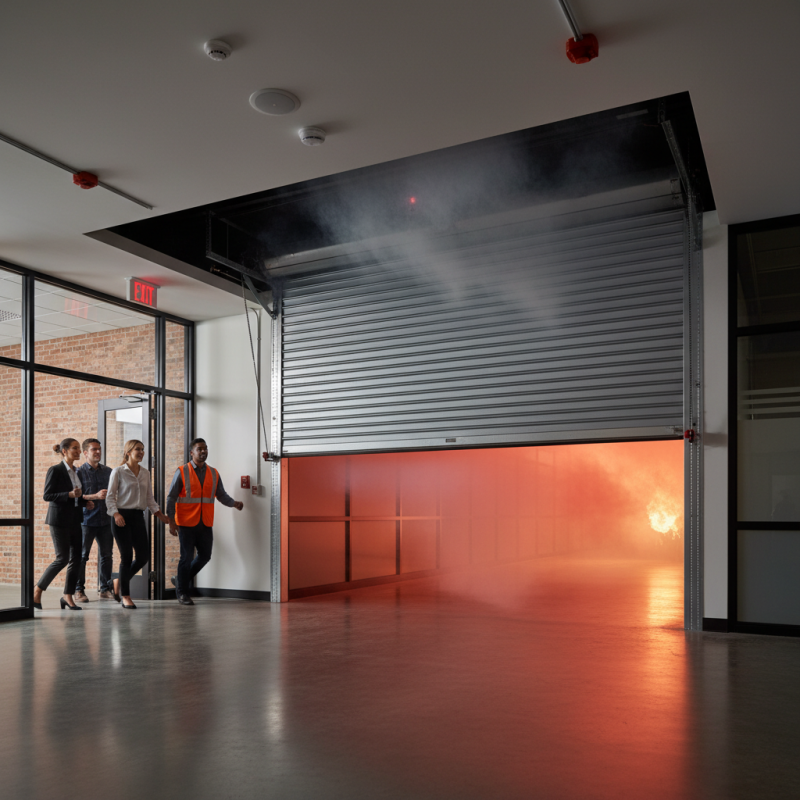
What is a Roll Down Fire Door and How Does it Work?
A Roll Down Fire Door serves as a critical safety feature in many commercial spaces. This door acts as a protective barrier against fire and smoke, helping to contain dangerous situations. It automatically closes when it detects heat or smoke, often providing vital escape time for occupants.
These doors are typically constructed from sturdy materials, ensuring durability and effectiveness. When in operation, they roll down from an overhead position, sealing areas to prevent the spread of flames. However, maintenance can be an issue. Many businesses overlook regular checks, risking door malfunctions during emergencies.
Understanding how a Roll Down Fire Door works reveals its importance. Yet, some might assume that installation alone guarantees safety. Regular training and awareness around fire procedures are necessary for ensuring that these doors perform as intended. Ignoring these can make all the difference in a crisis.
What is a Roll Down Fire Door? Definition and Purpose
A roll down fire door is a crucial safety feature in buildings. Its primary purpose is to contain fire and smoke. These doors are often made of durable materials like steel. When a fire alarm activates, the door rolls down automatically. This action prevents flames from spreading to other areas. It also helps protect escape routes.
Understanding the function of these doors is essential. They are not just safety devices but part of a larger fire protection strategy. Regular maintenance is vital for ensuring their effectiveness. If neglected, they may fail to operate during an emergency. This neglect can lead to serious consequences. Some might mistakenly believe these doors are infallible. In reality, they require attention and care to function properly.
Despite their importance, many building owners overlook their maintenance. A malfunctioning door can compromise safety. Periodic inspections should be a priority. Knowing when and how often these doors are maintained can save lives. Investing time in their upkeep can make a significant difference.
What is a Roll Down Fire Door and How Does it Work?
| Dimension | Details |
| Definition | A roll down fire door is a fire-rated door assembly that can roll down and close in the event of a fire to prevent the spread of flames and smoke. |
| Material | Typically made from steel or aluminum for durability and heat resistance. |
| Purpose | To provide a barrier against fire and smoke, enhancing the safety of occupants and minimizing property damage. |
| Operation | Powered by either electric or mechanical means, often with a fire alarm system to trigger activation. |
| Applications | Commonly used in commercial buildings, warehouses, and places where large openings need protection. |
| Maintenance | Requires regular inspections and maintenance to ensure proper function and compliance with safety regulations. |
| Regulations | Must adhere to local fire codes and regulations, ensuring effective installation and operation standards. |
Key Components of Roll Down Fire Doors: Materials and Mechanisms
Roll down fire doors are crucial for fire safety in commercial settings. They are designed to automatically close in the event of a fire, protecting the premises and individuals inside. The mechanism involves a heavy-duty curtain that rolls down from a storage area. This curtain is made from durable, fire-resistant materials. Options like steel and fiberglass are common. They are engineered to withstand high temperatures.
The key components of roll down fire doors include various materials and mechanisms. The fire resistance rating depends on the materials used. Steel offers robust protection, while fiberglass provides flexibility. Both have their pros and cons. The curtain’s rolling mechanism also plays a vital role. Springs and weights assist in the smooth operation. Yet, these mechanisms can sometimes malfunction. Regular inspections are essential to identify wear or damage.
Considering installation, precise fitting is crucial. Misalignment can lead to improper sealing. This compromises safety. Ensuring that the door meets local fire codes is vital but can be overlooked. Even minor details matter. A small gap can let smoke escape. Safety should never be an afterthought.
How Roll Down Fire Doors Function: Operation and Activation
Roll down fire doors are essential for fire safety in commercial buildings. They act as barriers, preventing the spread of smoke and flames. Understanding their operation is vital. These doors typically function through a spring-loaded mechanism that allows them to descend smoothly. In emergency situations, activation can occur via smoke detectors or manual controls, which trigger the door’s closing process.
In recent studies, approximately 30% of fire-related deaths occur due to smoke inhalation. This statistic emphasizes the importance of roll down fire doors in containing hazardous environments. When these doors close, they create safe compartments, reducing the risk of exposure to toxic fumes. Installation quality affects performance. Poorly maintained systems may fail during a fire emergency, leading to devastating outcomes.
Tips: Regularly inspect the activation systems. Ensure they are clear of obstructions. Staff training is essential. Everyone should know how to manually operate the doors if necessary. Consider scheduling yearly professional checks for optimal performance. Investing in upkeep not only meets fire codes but also ensures safety.
Roll Down Fire Door Activation Response Times
Industry Standards and Compliance for Roll Down Fire Doors
Roll down fire doors are crucial for fire safety in commercial buildings. They serve as barriers to contain fire and smoke. Understanding their compliance with industry standards is vital. Compliance ensures effectiveness during emergencies. Organizations must follow local fire codes and regulations.
Fire doors must meet testing requirements. This includes standards set by organizations like Underwriters Laboratories (UL). They undergo rigorous testing for durability and heat resistance. Installation must also comply with the National Fire Protection Association (NFPA) guidelines. Utilizing qualified professionals for installation can prevent costly mistakes.
Tips: Regular maintenance is key. Inspect doors at least twice a year. Look for obstructions and ensure the door seals properly. Consider documenting inspections to track compliance. Monitoring these can improve overall safety. Don’t let negligence affect fire safety. Remember, small oversights can lead to major issues.
Benefits of Installing Roll Down Fire Doors in Commercial Spaces
Roll down fire doors are vital in commercial buildings. They serve as crucial barriers that contain flames and smoke during a fire emergency. When activated, these doors roll down swiftly, creating a protective shield. Their design ensures minimized risk to occupants and property.
The benefits of installing roll down fire doors in commercial spaces are significant. They enhance safety by preventing the spread of fire. This containment limits damage and gives occupants more time to evacuate. Additionally, they can be designed to complement the aesthetics of your business. However, maintenance can be a challenge. Doors may require regular checks to ensure they operate smoothly. Proper training for staff is also essential to handle these installations correctly.
Another advantage is the flexibility they offer. Roll down doors can be used in various settings. They are effective in warehouses, retail spaces, and even restaurants. Yet, not all locations may benefit equally. Sometimes, visibility through these doors can be limited when closed. This can hinder quick access during non-emergency situations. Balancing the safety features with operational needs is crucial for making informed decisions.