Our Company


China Top Blood Test to Detect Alzheimers?

A Blood Test To Detect Alzheimers may sound like a simple answer to a worrying question. In China, as elsewhere, researchers are studying blood biomarkers that may help identify changes linked to Alzheimer’s disease. Some tests measure proteins such as phosphorylated tau, while others examine amyloid-related markers. A small blood sample is appealing. It is easier to collect than spinal fluid and less intimidating than some imaging procedures. That matters. But a promising test is not automatically a reliable diagnosis, and “top” can mean different things: research performance, clinical availability, cost, or approval for a particular use.

For patients and families, the important question is how a result would guide care. A clinician may consider blood-test findings alongside symptoms, medical history, cognitive assessments, and, when appropriate, brain imaging or other tests. Results can vary with the assay, the person tested, and the setting. A positive result should not be treated as proof of Alzheimer’s on its own. Nor does a negative result settle every concern. China’s testing options and clinical guidance may change as evidence develops, so claims about a single best test deserve careful checking. The picture is not perfectly tidy. Ask who validated the test, what it can detect, and whether a specialist will interpret the result. Those details make the difference between an intriguing lab result and useful medical information.
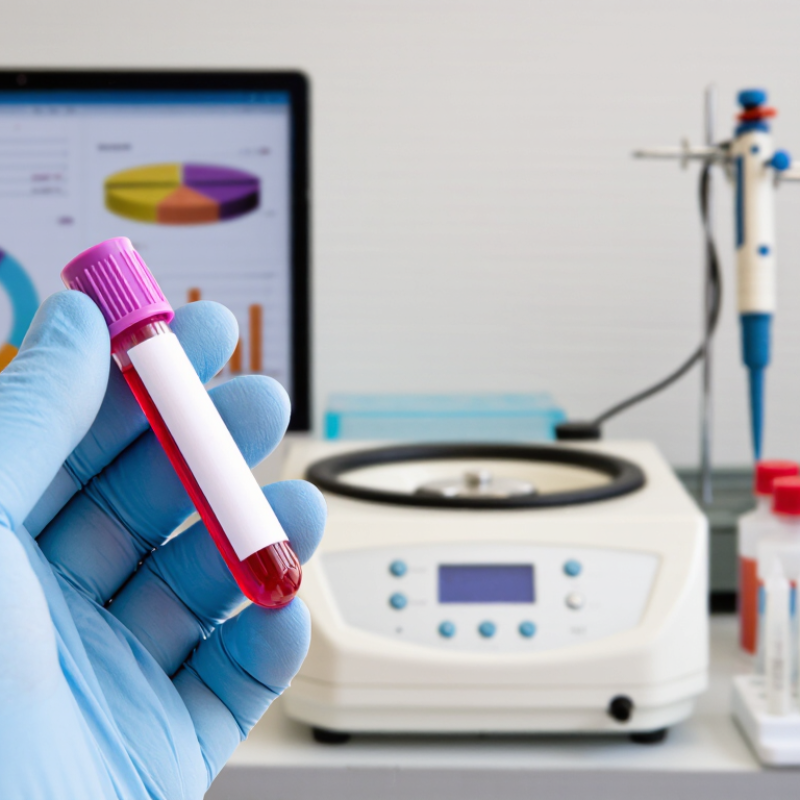
China Top Blood Test to Detect Alzheimers?

What Is China’s Blood Test for Detecting Alzheimer’s Disease?

“China’s blood test” is not one universally standardized test. The phrase usually describes blood assays measuring Alzheimer’s-linked proteins, including phosphorylated tau (p-tau) and the amyloid-beta 42/40 ratio. A sample is drawn from the arm, then analyzed in a laboratory. These markers can help estimate whether Alzheimer’s-related changes are present; they do not, by themselves, explain every memory problem.

Evidence is promising, but context matters. A 2024 JAMA study of 1,213 patients reported about 90% diagnostic accuracy for a blood-based biomarker approach, compared with lower accuracy from clinicians’ initial assessments. That result came from a specific study population and does not guarantee the same performance for every test or patient in China.

The World Health Organization estimates that 55 million people worldwide live with dementia, with Alzheimer’s disease accounting for 60–70% of cases. Still, a positive blood result is not a complete diagnosis. Clinicians consider symptoms, medical history, and sometimes brain imaging or cerebrospinal-fluid tests.

Not a stand-alone diagnosis.

Test availability and validation can also differ between hospitals. A blood draw is simpler than a spinal tap, but the science is not yet simple.

How the Test Measures Alzheimer’s-Related Biomarkers

How the Test Measures Alzheimer’s-Related Biomarkers

A blood test does not look for memory loss itself. It measures proteins linked to Alzheimer’s disease, especially phosphorylated tau, or p-tau, and the ratio of amyloid-beta 42 to amyloid-beta 40. In a typical lab, a small blood sample is processed to quantify these molecules. Some tests also measure GFAP or neurofilament light, which can reflect brain-cell injury but are not specific to Alzheimer’s.

Not a diagnosis.

A 2024 JAMA study of 1,213 people in Swedish primary-care and memory-clinic settings assessed blood biomarkers including p-tau217 and the amyloid ratio. The combined approach reached about 90% diagnostic accuracy in primary care and 91% in specialist care. These are study results, not a guarantee for every patient; performance can vary with the test, population, and clinical setting.

The 2025 Alzheimer’s Association clinical practice guideline sets useful benchmarks: blood tests with at least 90% sensitivity and 75% specificity may help triage patients, while higher accuracy is needed to replace established tests in specialist care. A positive result may still need confirmation through cerebrospinal-fluid analysis or amyloid PET imaging.

The uncomfortable gap is that “abnormal” does not always mean Alzheimer’s is causing someone’s symptoms. A clinician must interpret the numbers alongside symptoms, medical history, and other findings.

How the Test Was Developed and Validated

A blood test for Alzheimer’s disease usually begins with a specific question: can measurable proteins in blood reflect changes in the brain? Researchers select candidate markers, then test whether their levels track with established measures, such as brain scans, spinal-fluid analysis, and clinical assessments. A small blood sample is easier to collect. But convenience alone is not proof.

Development requires careful measurement. Researchers check whether results stay consistent across laboratories, testing equipment, and sample-handling conditions. A delayed sample or repeated freeze-thaw cycles can affect readings. They also examine whether age, kidney function, or other illnesses influence a marker. These details matter.

Validation means testing the method in groups beyond the original research sample. Ideally, studies include people with different ages, backgrounds, symptoms, and stages of cognitive change. Researchers compare test results with independent clinical findings, then report sensitivity, specificity, and uncertainty. A promising result in one group may perform differently elsewhere. That is a real limitation. Until evidence supports its use in a defined setting, a blood result should inform—not replace—a clinician’s assessment and other diagnostic evidence.

China Top Blood Test to Detect Alzheimers? - How the Test Was Developed and Validated

Dimension Evidence-Based Information How It Is Assessed Interpretation and Limitations
What a blood test measures Blood biomarkers associated with amyloid plaques, tau pathology, or neuronal injury are studied as aids to Alzheimer’s disease assessment. Researchers measure biomarker concentrations in plasma and compare them with clinical assessments and established reference tests. A blood result alone does not establish the cause of memory or thinking problems.
Phosphorylated tau (p-tau217) Plasma p-tau217 is associated with Alzheimer’s-related tau changes and has shown strong diagnostic performance in multiple research cohorts. Assay results are evaluated against amyloid and tau findings from cerebrospinal fluid tests or brain imaging. Performance can vary with the assay, patient population, disease stage, and clinical setting; it is not a universal stand-alone diagnosis.
Other blood biomarkers Studies also assess p-tau181, the amyloid-beta 42/40 ratio, and neurofilament light (NfL). Biomarkers may be assessed individually or in combination with other clinical information. NfL indicates neuronal injury but is not specific to Alzheimer’s. Amyloid and tau markers also require careful clinical interpretation.
Test development Development generally involves selecting a biomarker, creating a laboratory assay, and assessing analytical performance such as precision, detection limits, and sample stability. Laboratories test repeated samples and evaluate whether measurements remain reliable across runs and relevant sample-handling conditions. Reliable laboratory measurement is necessary but does not, by itself, demonstrate clinical usefulness.
Clinical validation Validation studies compare blood-test results with a reference standard, commonly amyloid PET imaging or cerebrospinal-fluid biomarkers, alongside clinical assessment. Studies examine sensitivity, specificity, predictive values, and performance in the population where the test is intended to be used. Results from a specialist memory-clinic cohort may not apply directly to general screening or to populations with different characteristics.
China-specific evaluation A test intended for use in China should be evaluated in appropriately designed Chinese clinical cohorts, including people with relevant age ranges and clinical conditions. Strong evidence would include prospective, multi-centre validation and comparison with accepted reference methods. A “top” ranking requires comparable head-to-head evidence and a clearly defined use case; a single universal ranking cannot be inferred from biomarker research alone.
Clinical use Blood biomarkers may help inform whether further Alzheimer’s-related evaluation is appropriate. Results should be considered with medical history, cognitive assessment, examination, and—when indicated—confirmatory testing. Diagnosis and treatment decisions should be made by qualified healthcare professionals. A negative result does not rule out every cause of cognitive symptoms.

Key takeaway: Blood-based Alzheimer’s biomarkers are a developing clinical tool. Their accuracy and appropriate role depend on the specific assay, validation population, and intended use; no blood result should be interpreted in isolation.

Clinical Uses, Benefits, and Limitations

Blood tests for Alzheimer’s disease are moving from research into clinical assessment, including in China. Tests may measure blood-based markers such as phosphorylated tau or the amyloid-beta 42/40 ratio. These results can help estimate whether Alzheimer’s-related changes are present. They do not, by themselves, confirm a diagnosis. Clinicians interpret them alongside memory testing, medical history, and sometimes brain imaging or spinal-fluid tests.

A blood test is less invasive than a spinal tap and may be easier to repeat. It can help specialists decide who needs further evaluation. Still, accuracy varies by test, patient group, and laboratory. Other health conditions, including kidney problems, may affect some marker levels. A result can cause worry if its limits are not explained. Availability and clinical validation may also differ between hospitals and regions in China. Not a verdict.

Tips: Ask which marker the test measures, how results guide care, and whether another assessment is needed. Bring a list of medicines and symptoms, such as missed appointments or repeated questions. Seek interpretation from a qualified clinician rather than treating a single number as a diagnosis. I would not use a screening result alone to make major care decisions.

Blood Tests for Alzheimer’s: Clinical Uses, Benefits, and Limitations

How to read this chart: These are recommended minimum performance thresholds for blood-based biomarkers used in specialized care—not results from a particular test, a ranking of tests, or China-specific data. For triage, guidance sets a minimum sensitivity of 90% and specificity of 75%; for a test intended to confirm Alzheimer’s-related pathology, both should be at least 90%.

Blood biomarkers may help clinicians decide whether further evaluation is needed and can reduce reliance on more invasive or costly tests. Results must be interpreted alongside symptoms and clinical assessment; performance varies by test and population, and a blood test alone does not diagnose Alzheimer’s disease.

Source: Alzheimer’s Association clinical practice guideline on blood-based biomarkers in specialized care. Thresholds shown are guideline criteria, not observed accuracy for an individual test.

Accuracy, Availability, and Future Research

A blood test for Alzheimer’s disease is promising, but there is no single “top” test for every patient in China. Tests measuring blood-based p-tau217 or p-tau181, often alongside amyloid-related markers, may help identify changes linked to Alzheimer’s. Accuracy depends on the specific assay, the patient group, and the threshold used. Some studies report strong results, but performance can differ in everyday clinics. That matters. A blood result alone cannot confirm a diagnosis or explain every memory problem. Clinicians may consider symptoms, medical history, and, when appropriate, cerebrospinal fluid tests or brain imaging.

Availability in China is not necessarily uniform. Access may depend on local clinical services, regulatory status, and whether a hospital offers the test as part of an evaluation or research study. Patients should ask what the result can—and cannot—tell them. A positive result is not the same as a complete diagnosis.

Future research needs to test these markers across larger, varied Chinese populations, including people with other illnesses that can affect blood markers. Researchers also need clearer cutoffs and long-term follow-up. Practical questions remain: Can testing guide care earlier, and does it work reliably outside specialist centers? The answers are still developing.