What Is an Ankle Splint Used For?
An Ankle Splint is used to limit painful movement, support weak tissues, and protect the joint during recovery. It may help after an ankle sprain, fracture, tendon injury, or surgery. The right design can stabilize the ankle while allowing safe walking. It should not replace a clinical examination.
Ankle sprains are among the most common musculoskeletal injuries reported in sports medicine. The National Athletic Trainers’ Association position statement recommends external support and progressive rehabilitation for many lateral ankle sprains. A 2011 American Journal of Sports Medicine study led by Timothy A. McGuine, PhD, reported, “The use of lace-up ankle braces reduced the incidence of acute ankle injuries in basketball players.” That finding supports prevention, not automatic treatment for every injury. Context matters.
Market research also reflects rising demand. Grand View Research’s 2024 Ankle Braces and Supports Market report identifies sports injuries, rehabilitation, and joint support as important growth factors. However, commercial growth is not clinical proof. A splint that feels secure may still fit poorly. Too much restriction can cause stiffness, skin pressure, or weaker muscles.
Picture a swollen ankle inside a rigid brace after a long day. The toes should remain warm and normally colored. Pain should not steadily increase. A clinician may choose a compression sleeve, lace-up brace, walking boot, or custom splint, depending on the injury. The evidence is useful, but imperfect. This guide explains what an Ankle Splint can do, when it may help, and when professional assessment matters more.
What an Ankle Splint Is and How It Works
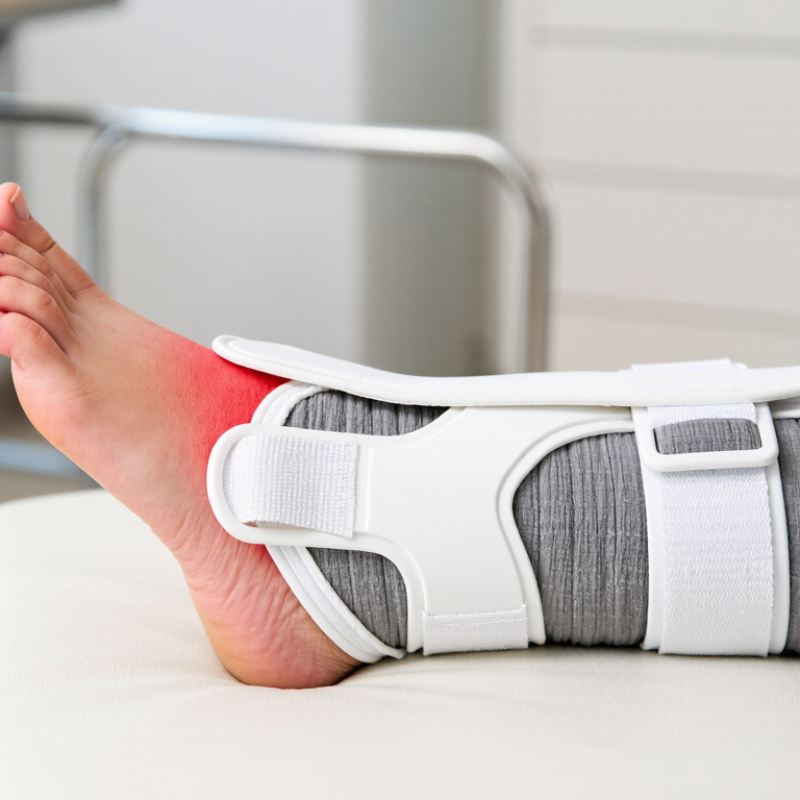
An ankle splint is a supportive device designed to limit harmful ankle movement. It usually combines firm side supports with adjustable straps or soft padding. This structure keeps the joint closer to a neutral position. It may reduce unwanted rolling, especially during walking.
An ankle splint can support recovery after a sprain, mild instability, or certain tendon problems. It does not repair damaged tissue. Instead, it helps control motion while the body heals. Some splints also reduce swelling by providing gentle compression. The exact fit matters. A loose splint may slide, while a tight one can cause numbness, tingling, or skin irritation. A healthcare professional should assess severe pain, deformity, or difficulty bearing weight. A common mistake is treating the splint as permission to return to sport too quickly. Support helps, but strength and balance still need attention.
Tips: Wear the splint as directed, and check your skin after removing it. Keep the ankle elevated when swelling increases. Move your toes regularly unless advised otherwise. Do not sleep in a rigid splint unless a clinician recommends it. Stop using it if pain worsens or circulation seems reduced. The best choice depends on the injury, activity level, and healing stage. That part is easy to underestimate.
Types of Ankle Splints and Their Uses
An ankle splint supports injured ligaments, controls swelling, and limits painful movement. Its best use depends on injury severity, stability, and recovery stage. Fit matters.
An elastic compression sleeve provides light support and gentle pressure. It suits mild swelling or early return to daily activity. A lace-up ankle splint offers adjustable support while allowing some movement. It is often used for mild to moderate sprains and sports training. A stirrup splint uses side supports to restrict inversion, the motion that commonly worsens lateral sprains. For severe injuries, fractures, or suspected ligament tears, a walking boot may protect the ankle during weight-bearing. It is not a casual upgrade.
The 2021 clinical practice guideline from the Journal of Orthopaedic & Sports Physical Therapy recommends external support with progressive weight-bearing after many acute lateral ankle sprains. A systematic review in the British Journal of Sports Medicine reported that lateral ankle sprains represent roughly 85% of ankle sprains. Research also links balance training and bracing with lower recurrence risk, especially among athletes. However, splints cannot replace examination, rehabilitation, or imaging when needed. A brace that feels secure may still restrict circulation. Check for numbness, skin discoloration, increasing pain, or excessive pressure. No splint fits every ankle. A clinician should assess deformity, inability to walk, or pain that remains severe after several days. In practice, choosing the strongest brace can be a mistake; controlled movement is often part of recovery.
How to Choose and Properly Wear an Ankle Splint
What Is an Ankle Splint Used For?
How to Choose and Properly Wear an Ankle Splint
An ankle splint supports the joint after a sprain, during recovery, or when instability affects walking. It can limit painful rolling while allowing controlled movement. Some designs also reduce strain from tendon irritation. A splint does not repair torn tissue. Persistent swelling, numbness, deformity, or severe pain requires professional assessment.
Choose support according to your condition and daily activity. A soft sleeve may suit mild swelling or gentle support. A semi-rigid model can help after a moderate sprain. Rigid protection is usually reserved for specific injuries or post-operative care. Ask a qualified clinician before using stronger support. Measure your ankle carefully, and check the fit with the socks you normally wear. The splint should feel secure, not restrictive. Tighter is not better.
Place the heel fully inside the opening, then fasten the straps from the foot upward. Walk a few steps on a safe surface. Your toes should remain warm and normally colored. Remove the splint and inspect your skin after the first hour. Red marks that fade quickly may be acceptable. Blisters, tingling, or increasing pain are warning signs. In practice, people often wear support too long because it feels reassuring. That can reduce natural movement and hide worsening symptoms. Follow the recommended schedule, keep the skin dry, and reassess your comfort each day.
Safety Considerations and When to Seek Medical Advice
An ankle splint supports injured ligaments, reduces unwanted movement, and may limit swelling after a sprain or fracture. It can make walking safer during early recovery. However, a splint does not confirm the injury type. A comfortable ankle may still contain a fracture.
Safety matters more than tight support. Check the toes every few hours. They should remain warm, pink, and normally sensitive. Loosen the splint if you notice numbness, tingling, increasing pain, pale or blue skin, or unusual swelling.
Keep the skin dry and inspect pressure areas, especially near the heel and ankle bones. The American College of Radiology recommends ankle imaging when clinical findings meet Ottawa Ankle Rules. A pooled analysis reported these rules can reach about 99% sensitivity for excluding fractures, though they are not perfect.
Seek urgent medical advice after a visible deformity, an open wound, severe swelling, or an inability to take four steps. Get emergency help for a cold, blue, or numb foot. Calf swelling, chest pain, or sudden breathlessness also require immediate assessment. Persistent pain deserves review, even when an X-ray is normal. Do not sleep, exercise, or drive in a splint unless a clinician has advised it. Real recovery is sometimes slower than expected. A splint can protect movement, but it cannot replace diagnosis, follow-up, or rehabilitation.