Breathing exercises are often marketed as a quick route to stronger lungs. The evidence calls for a more careful view. The World Health Organization reports that chronic obstructive pulmonary disease caused 3.5 million deaths worldwide in 2021. That figure shows the scale of respiratory illness, but it does not prove that a breathing device can prevent or treat it.
A Lung Excerciser may refer to an incentive spirometer, a threshold-resistance trainer, or another breathing tool. These devices work differently, and their benefits are not interchangeable. The American Thoracic Society’s 2023 clinical practice guideline strongly recommends pulmonary rehabilitation for adults with COPD, but that is a structured program—not a blanket endorsement of every home exerciser. An important distinction.
Physician and breathing educator Dr. Andrew Weil offers a broader principle: “If I had to limit my advice on healthier living to just one tip, it would be simply to learn how to breathe correctly.” That advice is not proof that a particular device works. The seven options below are compared by purpose, ease of use, evidence, and practical fit. Think of a clear plastic chamber, a resistance dial, or a slow, controlled breath—not a guaranteed cure. Results vary. Anyone with a lung condition, recent surgery, or unexplained breathlessness should ask a clinician which device, if any, is appropriate. These tools can look reassuringly simple; choosing one still deserves thought.
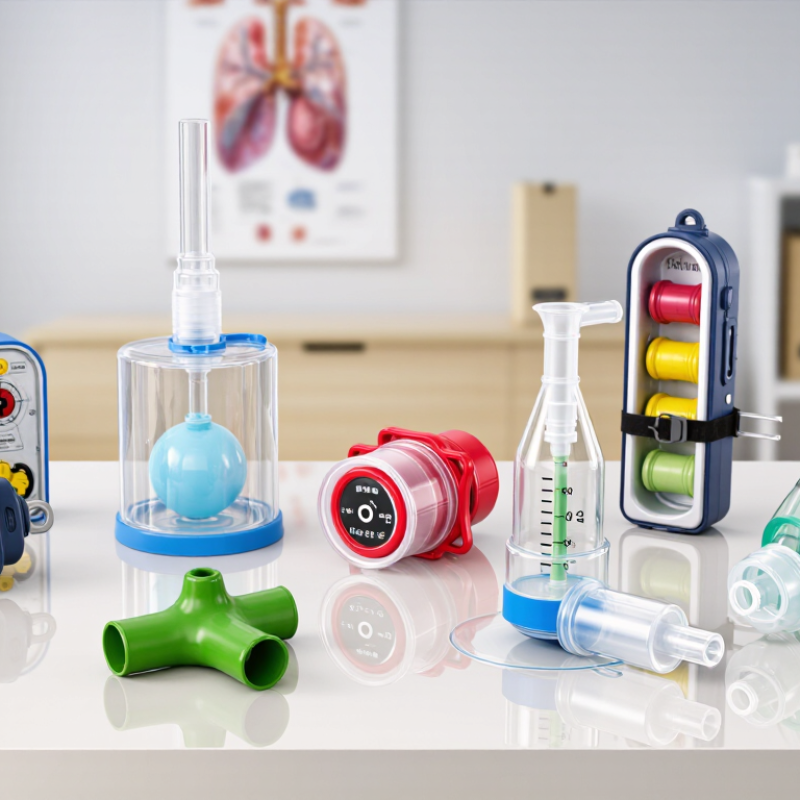
Lung exercisers create a controlled challenge for breathing muscles. Some use resistance that changes with airflow. Breathing faster or harder may increase the effort, so technique matters. Other devices use a threshold valve, which opens only after you generate a set pressure. That can make each breath feel more consistent. The difference is practical: resistance-based devices respond to flow, while threshold devices ask you to reach a target. Small changes matter. A clinician can help match the setting and breathing pattern to your needs, especially after illness or surgery.
Visual feedback can make training easier to follow. A moving ball, dial, or marker may show airflow or inhaled volume, depending on the device. Watch for a steady movement rather than chasing the highest number. Sit upright, keep your shoulders relaxed, and use the pace recommended for your device. Stop if you feel dizzy, unusually short of breath, or develop chest pain, and seek medical advice. Feedback is useful, but it is not a diagnosis. A display can look reassuring even when technique is off. That part is easy to miss. Clean and maintain the device as its instructions specify, since buildup can affect both hygiene and performance.
| Device type | How it works | Resistance or threshold | Visual or sensory feedback | Often suited to | Key consideration |
|---|---|---|---|---|---|
| Threshold inspiratory muscle trainer | Requires inhaling against a spring-loaded valve that opens after a set pressure is reached. | Usually adjustable in pressure units such as cm H₂O; the target is less dependent on how quickly the user inhales. | Typically shows a numbered resistance setting; some models include an indicator for inhalation. | Structured inspiratory muscle training when a clinician or training plan sets the load. | Correct technique and an appropriate starting load matter. It is not a substitute for prescribed treatment. |
| Flow-resistive inspiratory trainer | Air passes through an adjustable opening during inhalation, creating resistance. | Resistance is produced by the opening and airflow; the effective load can vary with breathing flow. | Often provides a dial or numbered setting; feedback may be limited to the setting itself. | Users who want a simple, adjustable inhalation-resistance device. | Unlike a threshold valve, the load is generally more sensitive to airflow and breathing technique. |
| Incentive spirometer | Encourages a slow, deep inhalation to raise a piston or move a marker toward a target. | Usually does not provide a calibrated inspiratory muscle-training threshold; the main goal is a controlled deep breath. | Clear visual movement provides immediate feedback about inhaled volume or flow, depending on the design. | Practising slow deep breaths, including in some post-operative care plans when recommended. | It is a breathing practice aid, not the same as a resistance-based muscle trainer. Follow the instructions provided by a health professional. |
| Positive expiratory pressure (PEP) device | Creates back-pressure as the user breathes out through a resistance; some care plans use it to assist airway clearance. | Expiratory resistance is set by the device design or an adjustable component; pressure targets should follow clinical instructions. | Some devices show a pressure reading; simpler designs provide little or no numeric feedback. | Airway-clearance routines when specifically recommended for a respiratory condition. | PEP is primarily an expiratory and airway-clearance approach, not an inspiratory muscle exerciser. |
| Oscillatory PEP device | Combines expiratory back-pressure with vibrations or oscillations during exhalation. | Resistance and oscillation depend on the device’s design, breathing flow, and technique; settings are not always expressed as a calibrated threshold. | Usually relies on the user’s sensation of vibration or sound; numeric feedback varies by design. | Airway-clearance techniques when advised by a respiratory clinician. | It is not interchangeable with an inspiratory muscle trainer. Technique and suitability depend on the individual. |
| Volume-oriented inspiratory trainer | Encourages repeated inhalation toward a selected volume target, sometimes with adjustable resistance. | Some designs focus on a volume goal rather than a pressure threshold; resistance features vary. | A volume scale or target marker helps users track progress across breaths. | Breathing practice where tracking an inhaled-volume goal is useful and appropriate. | A displayed volume goal does not by itself confirm correct technique or indicate that a particular target is medically appropriate. |
| Digital respiratory muscle trainer | Uses a sensor-controlled valve or airflow system to provide guided inspiratory and, in some devices, expiratory training. | May offer adjustable loads and programmed sessions; available modes and pressure ranges vary by design. | May display pressure, repetitions, session duration, or progress on a screen or connected interface. | Users who need structured tracking or guided sessions as part of an agreed training plan. | Digital tracking does not guarantee clinical benefit. Check that the device’s functions and prescribed load match the user’s needs. |
| How to choose: Threshold devices provide a defined pressure-based opening point; flow-resistive devices create a load that can change with airflow; incentive spirometers mainly provide visual feedback for deep inhalation; PEP and oscillatory PEP devices are generally used during exhalation for airway-clearance routines. People with lung or heart conditions, recent surgery, or unexplained breathlessness should ask a qualified health professional which device and technique are appropriate. | |||||